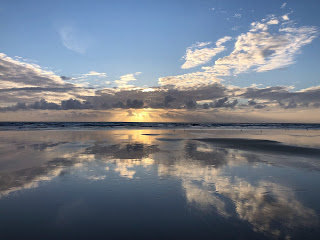
The Beach Today
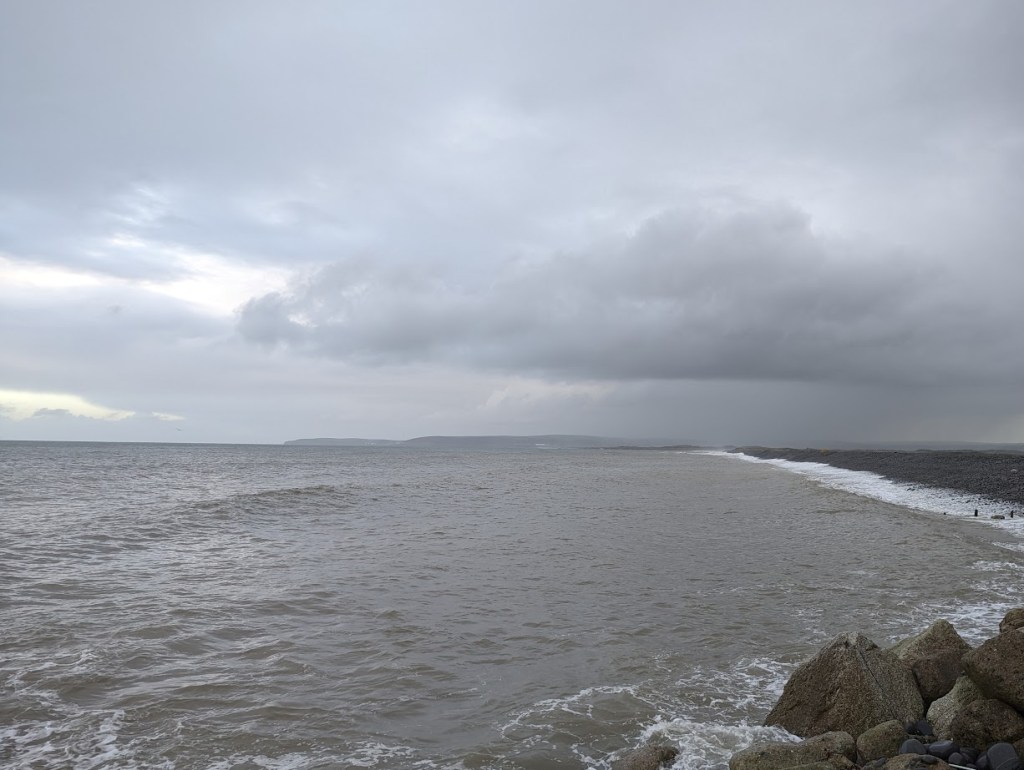
It is a grey gloomy day in December when the sea and sky deepen each other’s sombre mood. It can be hard to embrace this time of year. The landscape inspires a retreat into the cosiness of warm interiors and the escape into films, or books. We are all waiting for the sun to reappear.
And perhaps that is what winter is for; to rest, gather new strength and renew. Perhaps it is time to dive down below the dark exterior and discover tales of magic and mystery to entertain and intrigue. The sea in this picture, for example, may appear dark and forbidding, but it is merely hiding a rich treasure trove of tales of adventure, enough to keep us distracted and occupied until spring.
Wait a while for the tide to go out, for the treasures to be revealed for a ‘show and tell’!
Did you know?
Battle field
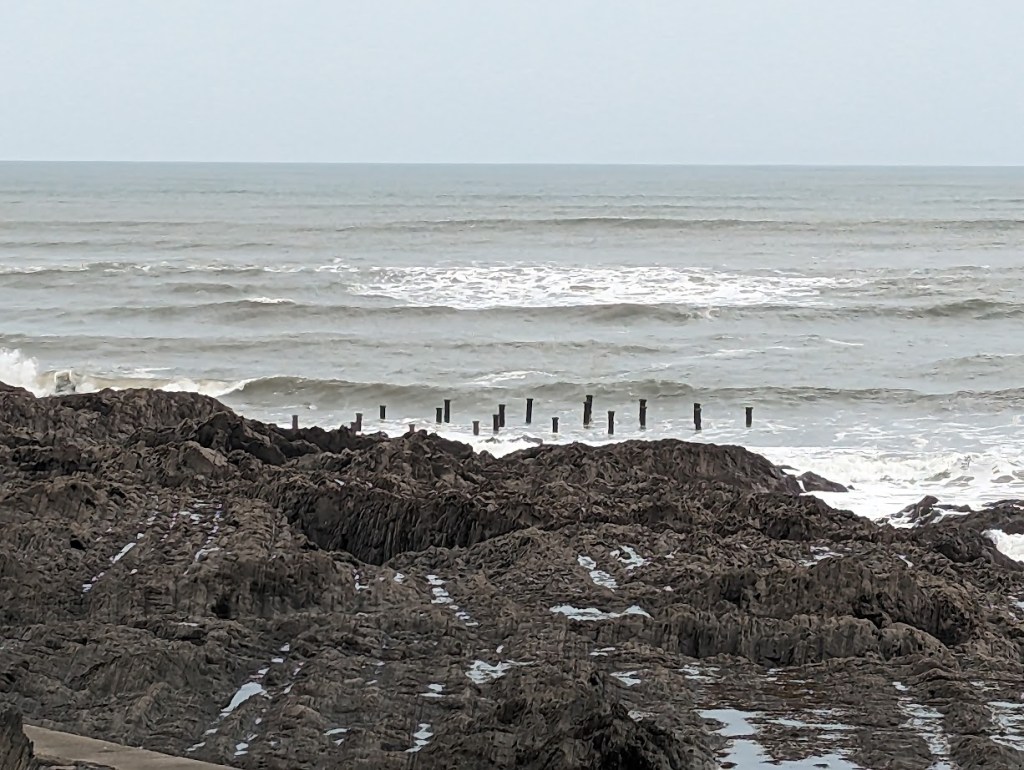
This picture shows the site of a battle, man against the elements – the elements won!
As the water levels drop the sea reveals steel piles, the remnants of a pier reaching out from the Southern tip of the bay. It was a grand structure in the 1870’s.
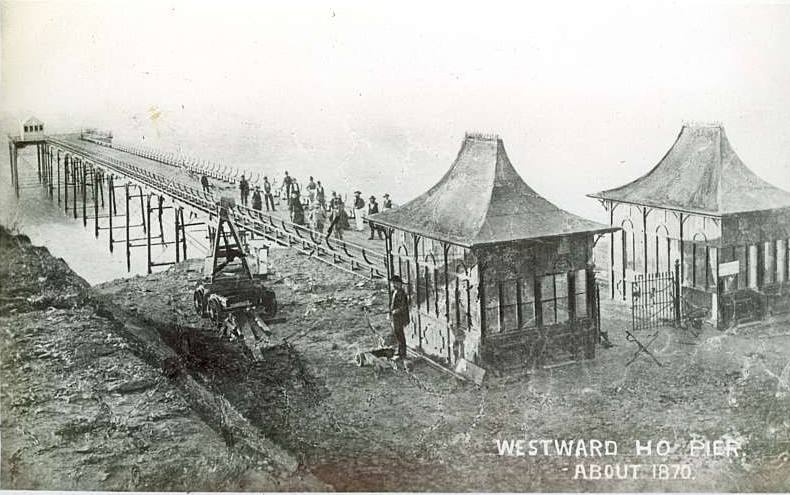
However in a ferocious storm in October 1871 gales snapped the cast iron supporting pillars ‘just like tobacco pipes’ and only 150 feet of the pier remained useable. It was estimated that £1,300 was needed to repair the structure, and the pier company balked at the cost. However the village was not quite ready to give up on their pier and a local man managed to resurrect a much shorter version, only 493 feet long for a more modest sum of £950 and a 2d entry charge two years later. But the sea and weather had already sent out its warning, and despite a lavish opening with 2000 guests invited to a ‘monster picnic’, fireworks, and a band its revival did not last long. Following yet more storm damage in February 1880 it was closed and subsequently demolished with only the steel piles a permanent reminder of the battle with the elements.
Mystery ship skeleton
And then there is the ‘mystery ship’. Its skeleton is visible when the tides fall very low and the sands shift to reveal their treasures.
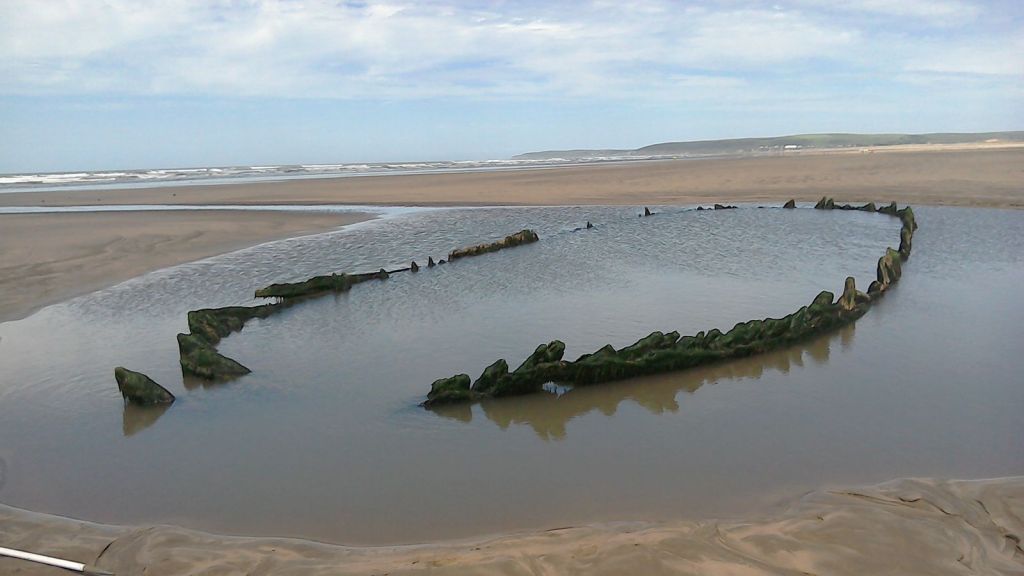
According to the Heritage Gateway, marine archaeologists checking the size and orientation of this vessel against old records believe it is the Sally, a cargo ship on its way to deliver port and ‘shumak’ (dried leaves used in the tanning industry) to Bristol from Spain, lost in 1769.
The oak-framed ship lies parallel to the pebble ridge, about 650 metres to the seaward side. It is around 25 metres long and 7.6 metres wide with semi-circular bows (at the north end) and a more oval stern. The planking is joined to the frames by trunnels (wooden nails, which swelled as they absorbed water).
What a storm that would have been, washing the tall ship, sails straining in the ferocious winds, up on the treacherous sandbank to stick fast at the mercy of the incoming tide and thundering waves. What happened to the crew? And the port?
Where forests once were
Reaching back further back in time as the tide retreats you can see the remnants of tree stumps. In prehistoric times where we now see sand, there were trees, wild boar, bear and wolves.
Layers of history intermingle in the sands of time.
Reflective moment
As the tide shows its secrets whole worlds spring to life to stimulate curiosity, imagination and focus us on the interesting and exciting. Let the wind blow and the sea sting our skin as we march through winter with our heads in the clouds of historic facts and fictional adventures! Reach for that good book.
The sound of the sea today
The interface between humans and nature is where the drama lies. Watch the waves climb and claw at the wall as it prevents its advance. Hear the hiss and swish as the relentless tide probes and digs for weaknesses. Watch as the plot unfolds. How does this story end?


Leave a Reply